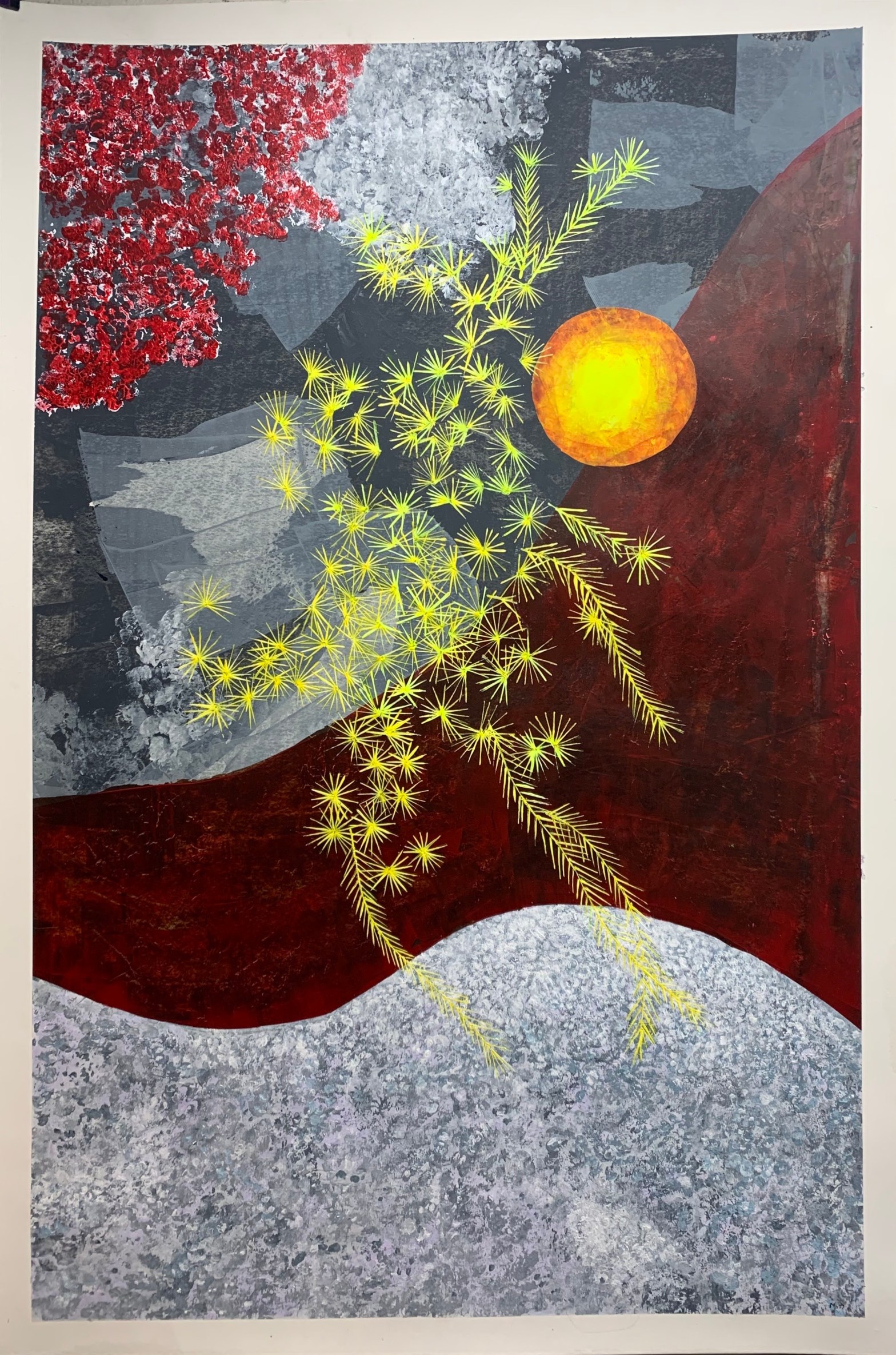
I have not formally studied art history or art philosophy. Both of which would provide some greater context to the idea of a Philosophy of Painting, but I will indulge myself by sharing my philosophy of painting which may provide a broader consideration in the work we do as painters. There are moments when I paint I am able to create and focus my skills on moving a painting forward and to its eventual completion. So many times I paint and get to a point of which I search for my next move. I am constantly thinking of where to go and how to get there. But for this blog I wish to step back and think about the greater context of painting and what occurs and what does it mean. In doing so it may provide a “Philosophical” mooring in understanding what it means to be a painter.
I will share a moment of caution when ever covering the topic of “Philosophy”, as it can have the effect of a boring movie that oscillates our consciousness into drifting slumbers. That being said I will say there is one American Philosopher I will reference who I believe brought us closer to understanding reality as it exists for many of us, I am referring to Robert Persig. He was the author of the 70’s classic, “Zen and the Art of Motorcycle Maintenance, An Inquiry into Values”. This book surveys Western Philosophy to find the answer to the question, “What is Quality and how can we define it to understand what it is?” The book concludes that Western Philosophy doesn’t really have the capacity to answer that question. The problem is whether Quality is found in the objective or subjective realms of reality that is the foundations of Western Philosophy. This question of quality is important because when we are creating a painting we certainly wish to create a quality painting. If we can’t define quality then how do we know if we are painting with a sense of quality.
One of my favorite activities is to go to a group I belong on Facebook called “Modern Artists 20th Century” and scroll the many and diverse works by great painters of 20th Century. Many times I am mesmerized by all the wonderful paintings which certainly have a high degree of quality, but what does that really mean?
Persig was philosophically perplexed by the question of quality and wrote a lesser known but I believe more significant second book called “Lila, An Inquiry into Morals.”
In this book he abandons the Western philosophical division of the Subjective and Objective moorings of reality and replaces with an Eastern Philosophical slant, replacing those Subjective and Objective approaches with the Dynamic and Static understanding of quality.
Static qualities are the physical properties of the canvas or paints, understanding if the painting abstract or realistic or the names of colors we see. It is anything we see while looking at any painting to understand it as …. a painting. Static qualities are essential to any painting and all quality paintings must have a static quality to exist. Dynamic qualities are what we find in the painting that we perceive and it moves us. Persig suggests that dynamic quality in itself can’t be defined but can be perceived. When we look at a painting we find ourselves connected the painting, there is likely a dynamic quality in play.
As painters we many times find ourselves alone with the piece we are creating. Our end goal is to complete a painting that best represents what we were inspired by. In the midst of a painting we search for our next step, next color, next augmentation of the composition, next texture, etc. As painters we intuitively move toward capturing the dynamic qualities in the painting. I always find it a fascinating moment when the painting is finished. Half the time it catches me by surprise. Sometimes I am working on the piece so focused on the next step that all of sudden I wonderfully come to the realization that there is no more steps and the painting is done. The question that is often asked of painters is, “when do you know a painting is finished”. The best answer I have heard is when the painting can stand on its own. I can sense when the painting I am creating has captured some dynamic quality I wanted to create. I have captured the inspiration that inspired the painting in the first place or managed to find it in the journey in creating it. All I know intuitively, is that there is a dynamic quality I have managed to capture which is part of who I am, and who I becoming with each piece. Any more steps will likely extinguish the dynamic quality I have found.
Then comes the next thrilling step, sharing it and wondering if anybody else will find the dynamic quality I know that is there. It is kind of like the ultimate, “Where’s Waldo”. If I have done my job as a painter, the viewer most likely will have a connection with the painting. Early on as a painter, when a viewer thoroughly enjoyed a painting, I would ask them what they really enjoyed about it. I have never really got a good answer to the question, and have since given up asking. Perhaps Persig was right, dynamic quality can’t be defined, but I am delighted when I can share it.
 Metsa Studio