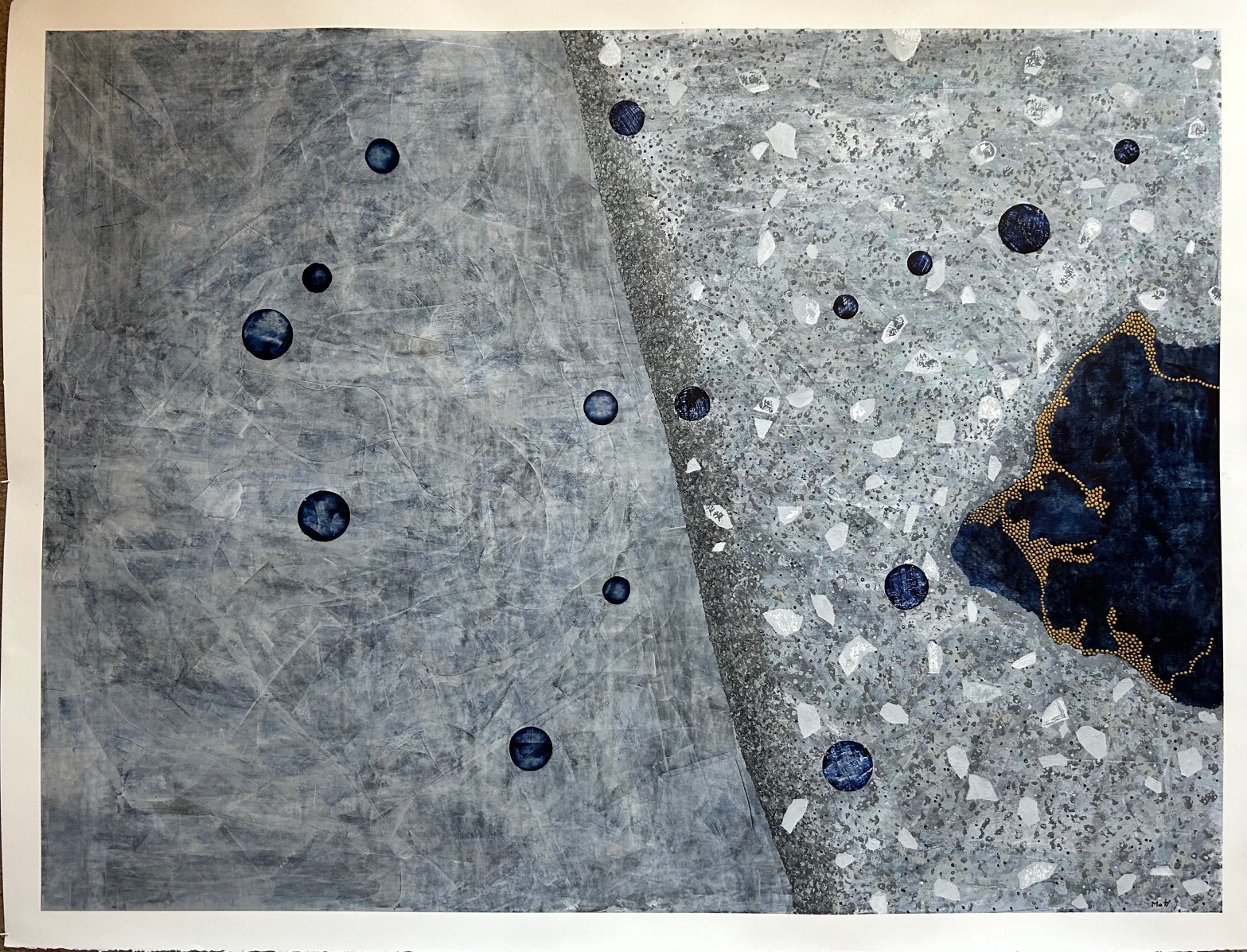
I remember a period as a young child when I would break out my crayons and a blank sheet of paper. Before making a single mark, I sat there and tried to get into the mindset of creating “thee” perfect picture. I remember strategizing exactly the first mark to start the drawing. Thinking the first mark is the key, if it is not perfect, hence the drawing will not be perfect. I remember every time I would lay the first mark, regardless of how careful I was, I sensed perfection slipping quickly away. It took a while to conclude that perfection is a failed approach and I had to settle on making a good drawing. Even as a child, this shift from perfection to good was such a real compromise for my ambitions, I felt disappointed. Yet I had to admit striving to be good was a lot more fun.
A couple of years ago I worked in a local art gallery and gift shop. We also sold some high-quality art supplies. The majority of customers were tourists, many retired age. They would circulate around the drawing supplies, and they often lamented that sometime in their life they once drew. I could sense a bit of uncertainty about idea of drawing again. Then I would do my counseling session/sales pitch. I explained what would happen if they would buy fine paper and quality pencils. I told them they would likely draw something that was 90%-95% crap and that was ok. The fun part was discovering the 5-10% that was good and they liked. It might be a series of lines or a single line. It could be a shading in which they capture depth. Whatever it was, the question was whether they could take what they liked to the next drawing. It is a process of growing from one drawing to the next. When they realized their fear was just a cool starting point to grow, there was a spark in their eyes. I sold a lot of sketch pads and pencils this way.
I applied this thought process recently to myself. I have never felt competent drawing the human figure. The local cultural center hosted live models to draw once a week. I had never done this before and struggled to accept that what I would draw would be mostly crap. But I went with a growth mindset and not one of perfection. The first session was a struggle, yet I did manage a couple of drawings that weren’t good but they weren’t horrible either. Perfection is a false “North Star” in drawing or painting. When I see the works of an accomplished artist, I search for the process and what they did well, being true to the painting and themselves. Being true to one’s self is the closest one might come to perfection. After 8 weeks I have grown immensely, each session I can draw one or two pieces that are very well done and affirm what I am capable of. It feels pretty sweet.
Understanding the process of moving forward and growing is not about perfection, is half the challenge. As one personally grows, so do their standards. As a painter, I search for an idea that has the potential of being a special painting. I know I have the skills and the ability to make a special painting. Yet, at least a third of the time, a painting falls short and goes south in the process. It happens for various reasons and at all stages of a painting. I have a collection of these failed paintings that I revisit every once in a while. Some of these paintings are near their end of completion but reached a dead end first. All I know is that the next move will likely have disastrous consequences, not based on perfection, but based on basic standards I hold for myself. Sometimes a painting, I am super excited, takes a disastrous turn that can’t be fixed and it’s heartbreaking. I recently had one such painting on the table. I looked at it for weeks trying to figure out how to fix it. I couldn’t. I finally this past weekend decided it was time to let it go and actually… start over. Not because of perfection but based on my personal standards. It was a strange feeling I had last night I finally came to the point in the painting in which the original wrong turn was taken. I am mulling over three different options for the “next step”. There is the potential that this painting may again fail, but if it doesn’t it will be a good one.
Doubt and failure often seem to validate the need for perfection. Again it is a false validation. The only validation of an artist’s work comes from within the artist. It is based on experiences that lead them on solid ground of where they are and points them in the uncertain direction of a painting’s journey. Doubt and failure are vital tools in the artistic endeavor, not barriers to overcome.


wow!! 27Perfectionism, Going South, and Do-Overs
LikeLike